Skip to content
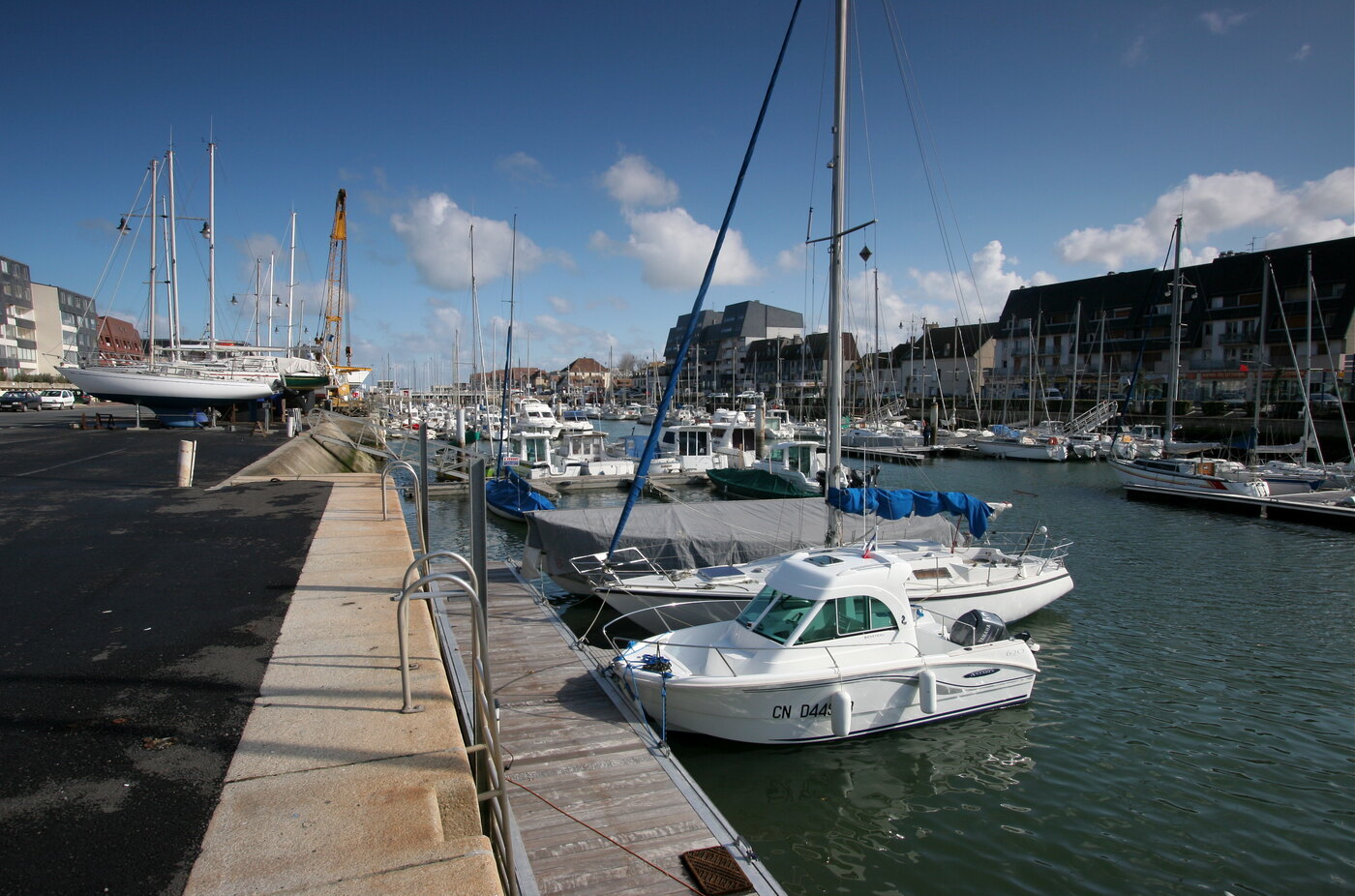
Sailing boats in the marina at Courseulles-sur-Mer
Côte de Nacre · Calvados

Visiting Courseulles-sur-MerThe harbour, the oysters and Juno Beach, ten minutes from the 5-star campsite La Capricieuse

The only working harbour on the Côte de Nacre: fishing boats, a fish market, oyster beds — and the beach where fourteen thousand Canadians came ashore on 6 June 1944.

Discover

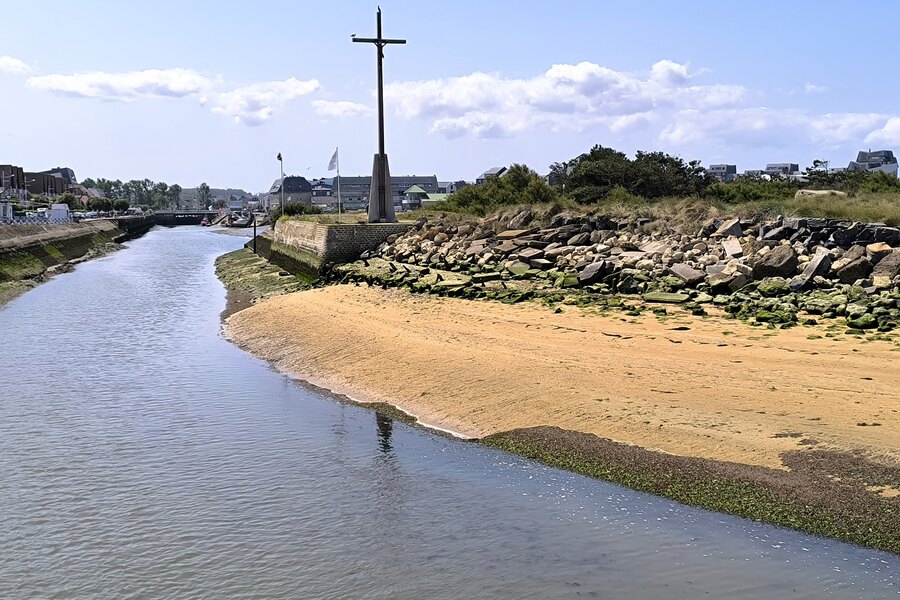
Courseulles has always lived off the sea: fishing, oyster farming since the 19th century, hulls under repair. The channel of the Seulles brings the boats right into the middle of town, between the fish market and the café terraces. And then there is the beach, immense, which was Juno Beach: a Cross of Lorraine marks the spot where General de Gaulle set foot in France again on 14 June 1944. Ten minutes' drive from La Capricieuse, a five-star Yelloh Village campsite in Luc-sur-Mer: cottages, a heated water park, a restaurant on site and the beach at the end of the lane.

Good to know

Getting there

From the campsite
  • 10 kmaway
  • 10 mindriving
  • Along the coastthe route

The coastal greenway links Luc-sur-Mer to Courseulles by bike, away from the road: an hour of family riding, flat from start to finish.

On the spot

Allow half a day
  • 2 hrsthe Juno Beach Centre
  • 1 hrthe harbour and the market
  • 30 minthe jetty and the cross

The fish market on the quay sells the day's catch and the local oysters; on Saturday mornings the town market takes over the square.

Good to know

Planning your visit
  • All yearthe fish market
  • Ticketedthe Juno Beach Centre
  • Freethe beach and the cross

The Juno Beach Centre takes about two hours and offers a guided tour of the beach bunkers, led by young Canadians.

In town

Six stops in Courseulles

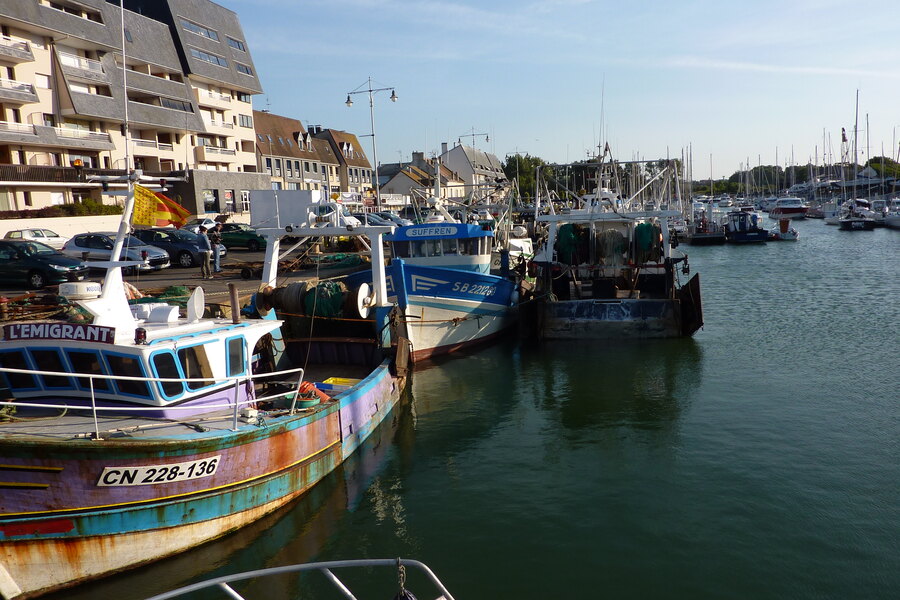
Fishing boats in the harbour at Courseulles-sur-Mer

The fishing harbour

A small fleet of trawlers coming in with the tide, a quay, an auction hall and the smell of fresh fish. This is the last working fishing port on the Côte de Nacre, and the beating heart of the town: people come as much to watch as to buy.
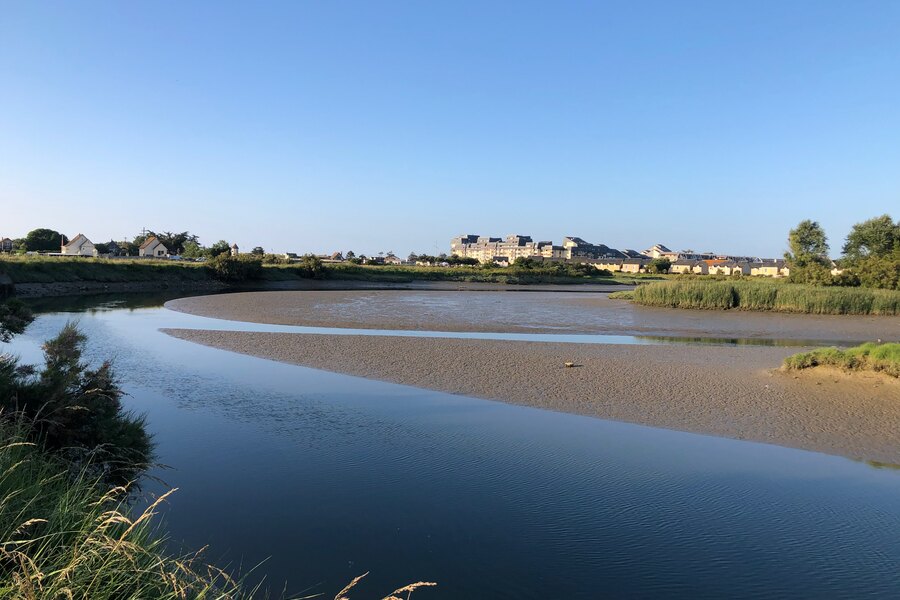
The channel of the Seulles and the oyster beds at Courseulles

The oysters and the channel

The Courseulles oyster, raised in the beds along the Seulles channel, made the town's gastronomic name as early as the 19th century — they were served at the table of Napoleon III. You eat them on the quay, facing the boats, barely out of the water.

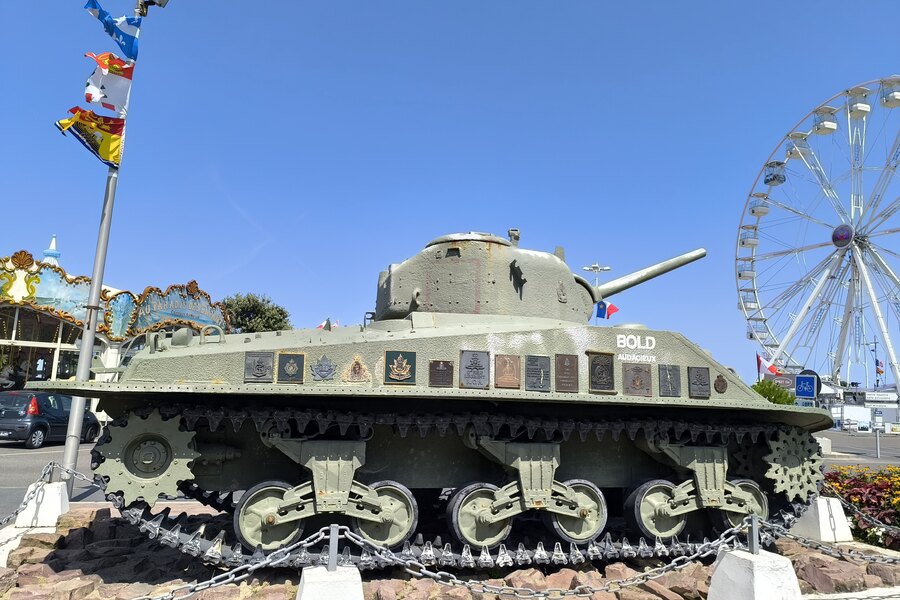
The Bold tank on Juno Beach at Courseulles-sur-Mer

The Juno Beach Centre

The Canadian D-Day museum, set on the dunes at the exact place where fourteen thousand men landed on 6 June 1944. It tells the story of Canada at war, and of the country itself: it is the only Canadian memorial in Normandy, and it is run by young Canadians.

The Cross of Lorraine standing on the beach at Courseulles-sur-Mer

The Cross of Lorraine

Eighteen metres high, planted in the sand where General de Gaulle set foot in France again on 14 June 1944. Churchill and King George VI came ashore at the same place in the days that followed: this beach has seen a great deal of history pass through.

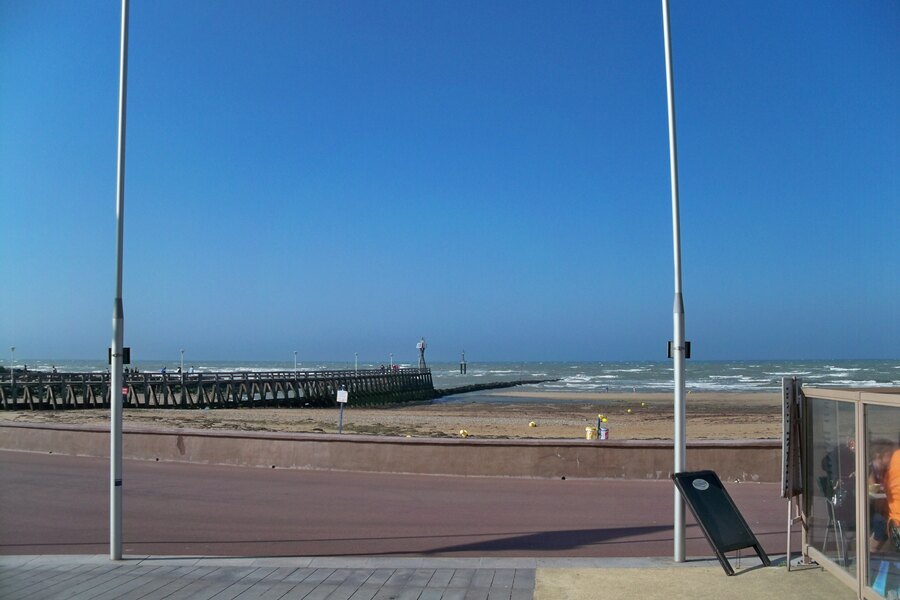
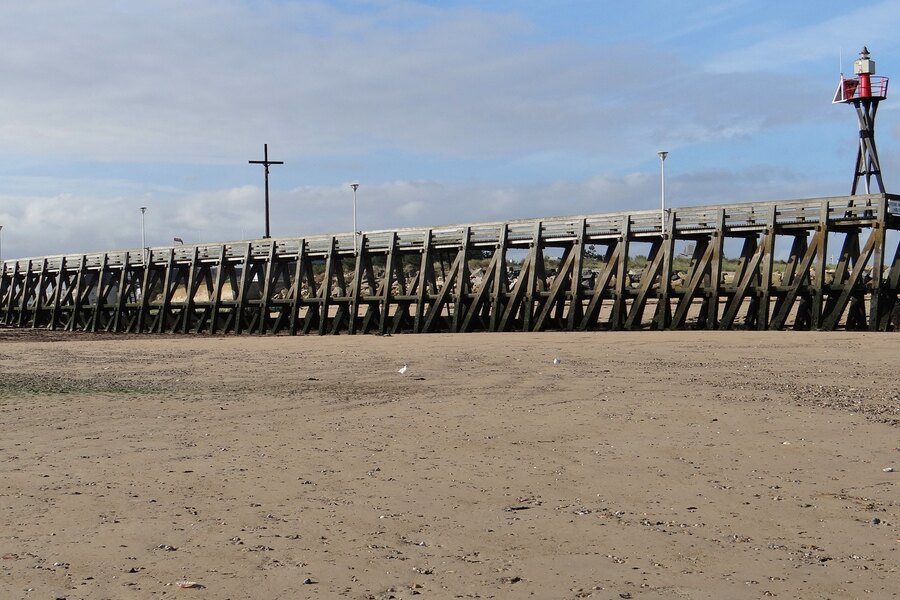
The wooden jetty at Courseulles-sur-Mer reaching out to sea

The jetty

Two wooden piers frame the entrance to the channel and reach out into the sea. You walk to the far end to watch the boats come in, and anglers cast from it — the best vantage point over the comings and goings of the harbour.

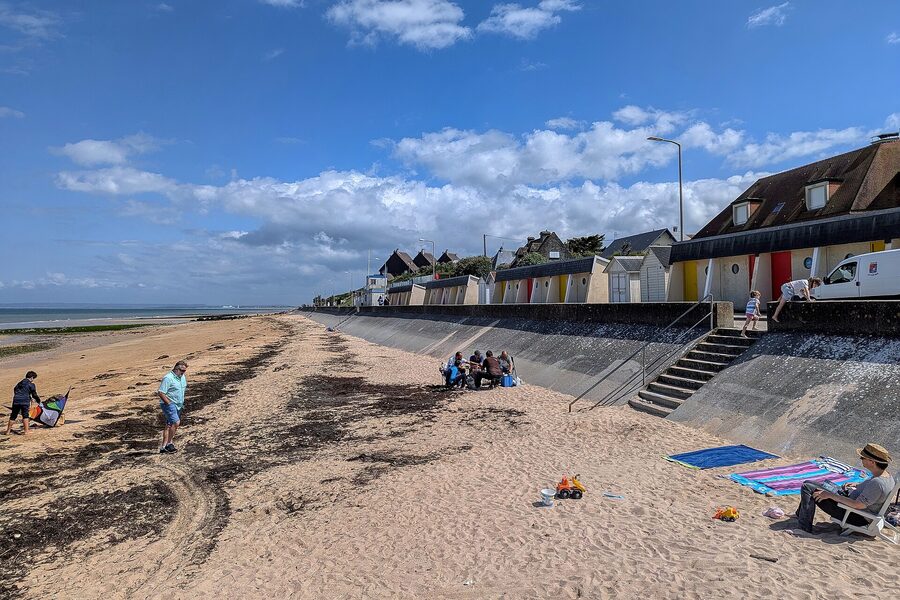
The wide sandy beach at Courseulles-sur-Mer

The beach

Sand as far as the eye can see on either side of the channel, lifeguarded in summer, with a sailing school and land yachting. At low tide the foreshore stretches out for hundreds of metres: children spend the afternoon there without ever getting water above their knees.

Photo credits: Nitot, Turgidson, René Hourdry, Ibex73, Jebulon, Dr Wilson, Marianne Casamance, Dobroš — Wikimedia Commons (CC BY-SA / CC0).

The detour worth making

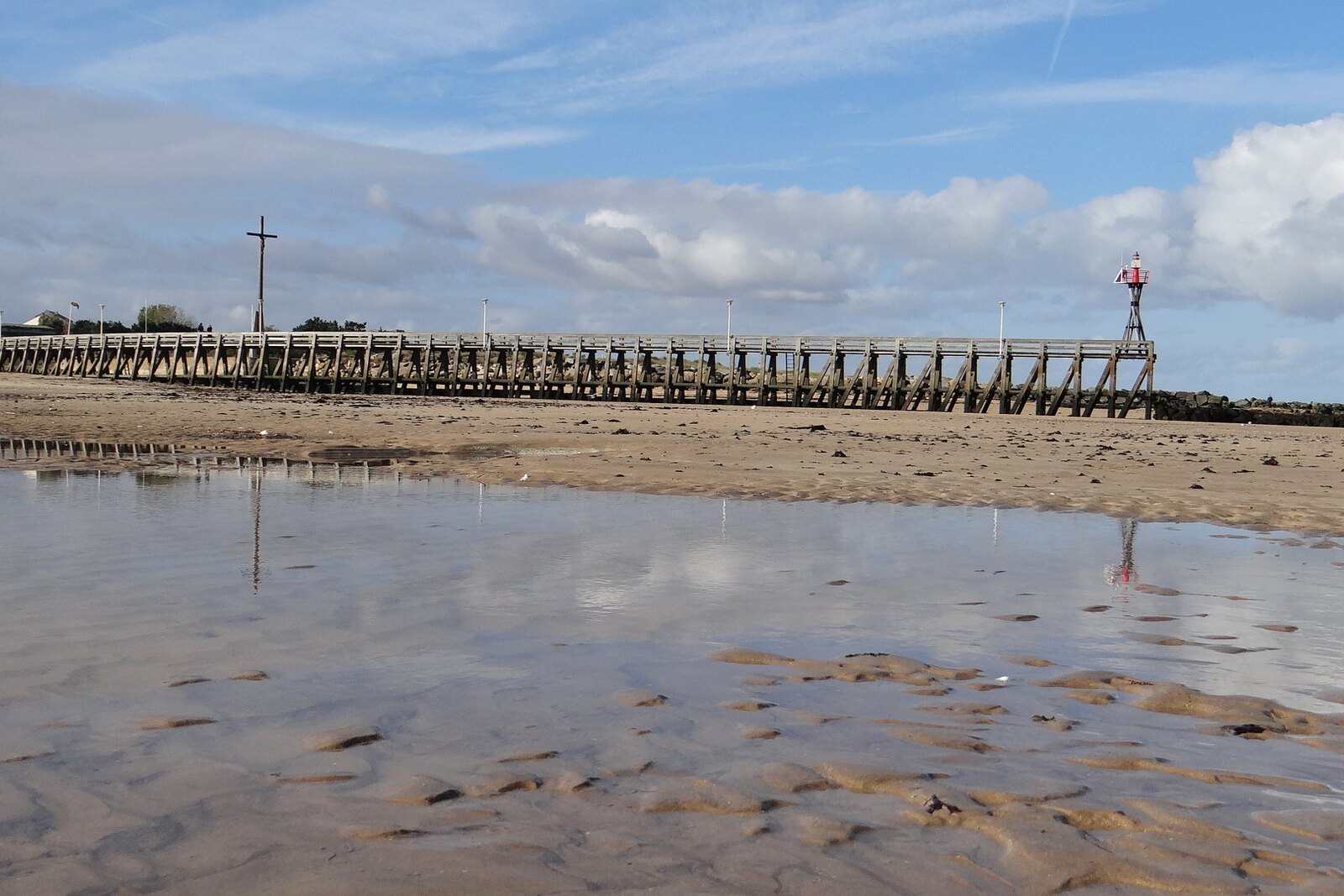
Low tide

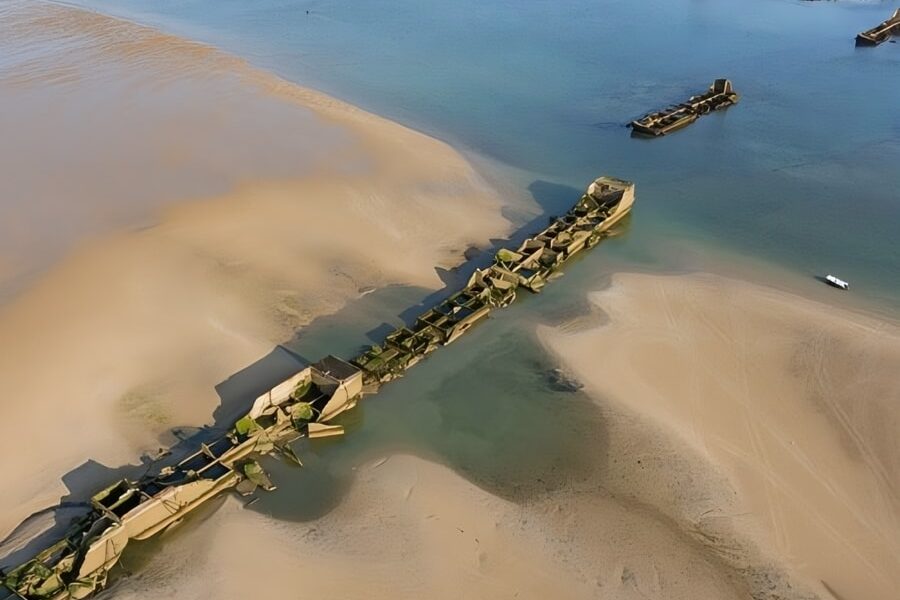
The foreshore at Courseulles-sur-Mer uncovered at low tidePhoto: Ibex73 · CC BY-SA 4.0
At spring tides

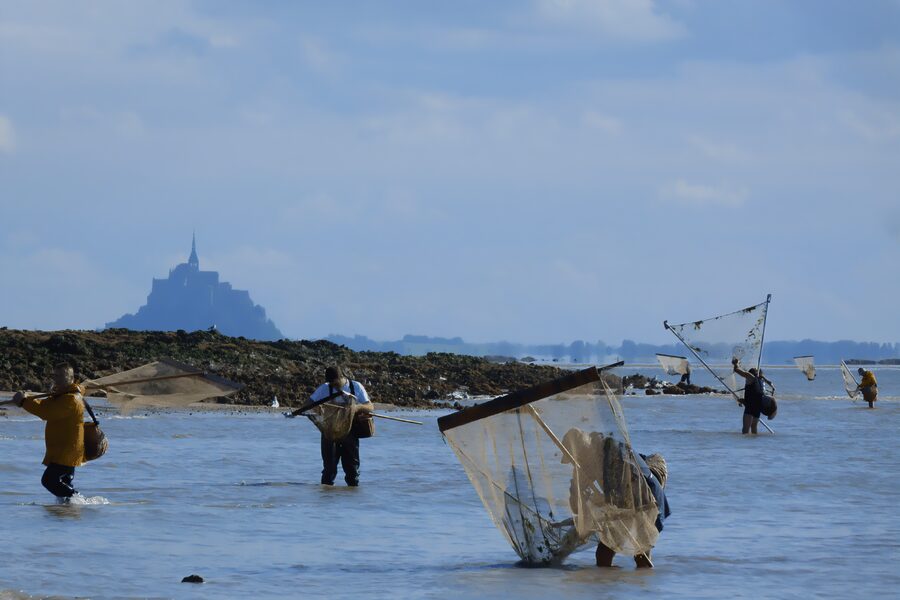
Shore fishing, between Courseulles and Luc

When the tidal coefficient goes above 90, the sea withdraws several hundred metres and lays the rocks bare: brown shrimp in the pools, cockles in the sand, mussels on the rocks. Shore fishing is free, provided you respect the minimum sizes and check the map of permitted areas, posted at the tourist office. Bring boots, a bucket, and start two hours before low water.

Frequently asked questions

Frequently asked questions about Courseulles-sur-Mer

How far is Courseulles-sur-Mer from the campsite?+
Ten kilometres, ten minutes along the coast road. By bike, the greenway links Luc-sur-Mer to Courseulles away from the traffic: an hour of flat, family riding.
What is there to do in Courseulles-sur-Mer?+
The Juno Beach Centre (two hours), the harbour and its fish market (an hour), the jetty and the Cross of Lorraine (thirty minutes). The beach and the cross are free to visit.
Where can you eat oysters in Courseulles?+
At the fish market on the quay, open all year: you will find the day's catch and the Courseulles oysters, raised just offshore. On Saturday mornings the town market takes over the square.
Can you cycle to Courseulles from the campsite?+
Yes: the coastal greenway follows the sea without ever crossing the road. Allow an hour from the campsite, on a route that is flat from start to finish.

Your base camp in Normandy

Five-star cottages, a heated water park and the beach fifty metres away, in Luc-sur-Mer.

Check availability
Village map — La Capricieuse
Map of La Capricieuse campsite: Omaha, Juno, Sword and Gold districts, water park in the centre and direct access to the D-Day beach
Click the map to zoom in · Esc to close