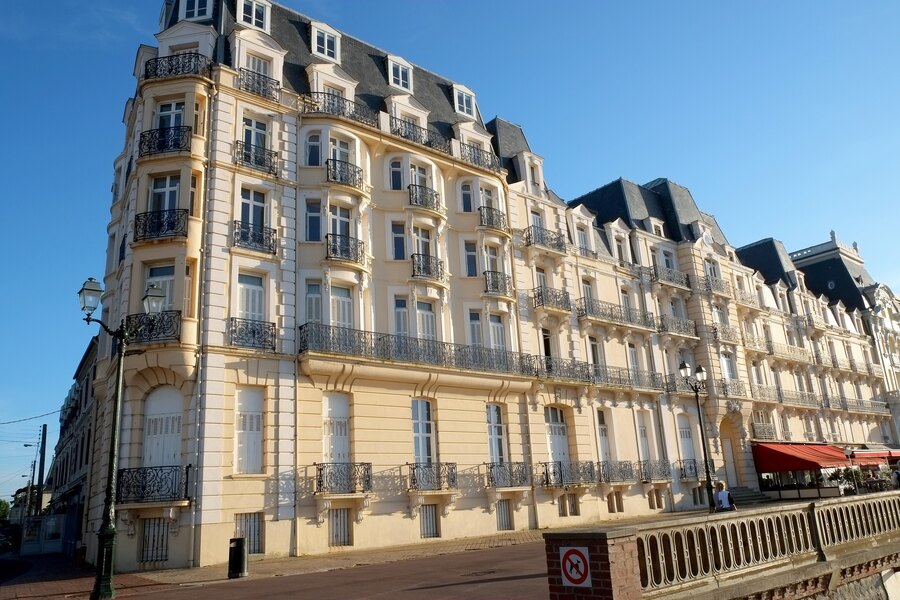
The Grand Hôtel
Built in 1907 facing the sea, it has stayed as Proust knew it: the glazed dining room, the hall, room 414 where he wrote through the night. It is the heart of the resort, and one of the few Norman grand hotels never to have closed.
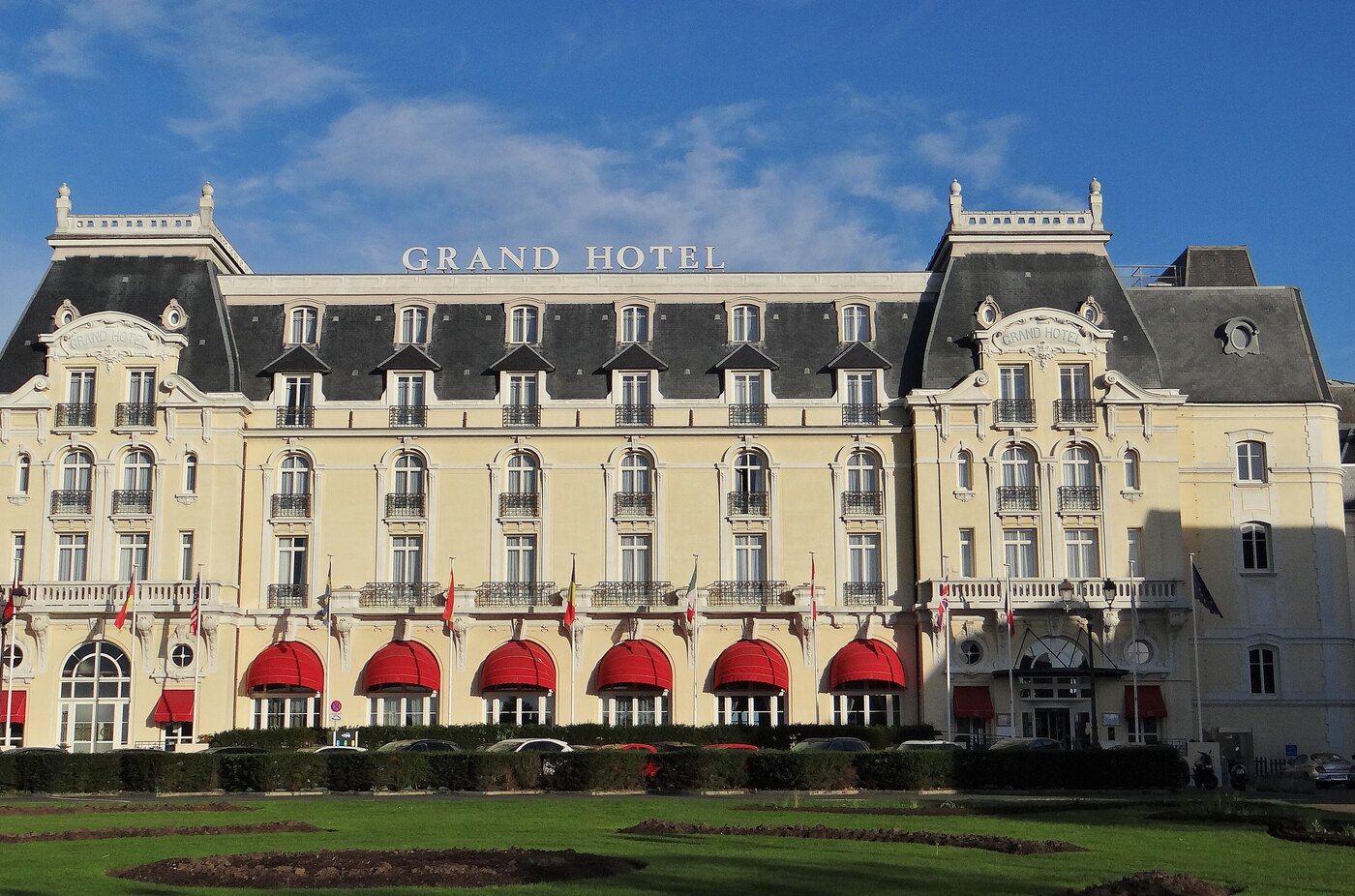
A town laid out like a fan around its casino, four kilometres of promenade facing the sea and a Grand Hôtel where Proust came to write: Cabourg is forty minutes from your cottage.
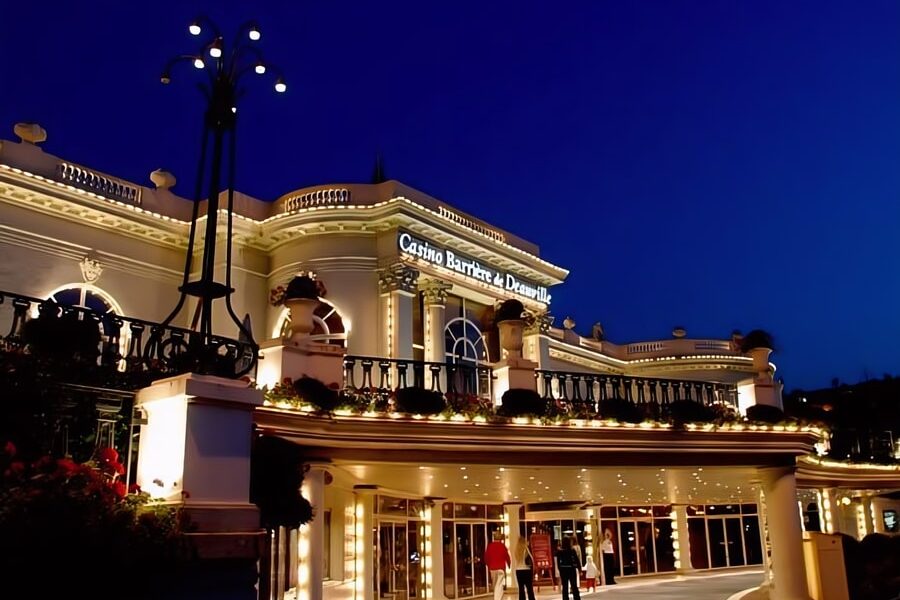
Cabourg is a town drawn with a ruler: from 1853 its avenues were laid out like a fan around the casino and the Grand Hôtel, facing the sea. Marcel Proust stayed here every summer from 1907 to 1914 and turned it into Balbec, the resort of his great novel; his room is still there. The rest is of a piece: seaside villas, a four-kilometre promenade that carries his name, gardens and a Belle Époque casino. Forty minutes' drive from La Capricieuse, a five-star Yelloh Village campsite in Luc-sur-Mer: cottages, a heated water park, a restaurant on site and the beach at the end of the lane.
You cross the Orne at Ouistreham, then the road follows the sea all the way to Cabourg: forty minutes in any season, outside July and August.
The promenade, entirely pedestrian, runs for four kilometres: one of the longest in Normandy, and one of the finest at sunset.
The public rooms of the Grand Hôtel can be visited freely: the bar, the dining room and the hall are worth a look, even if you are not staying.
Built in 1907 facing the sea, it has stayed as Proust knew it: the glazed dining room, the hall, room 414 where he wrote through the night. It is the heart of the resort, and one of the few Norman grand hotels never to have closed.
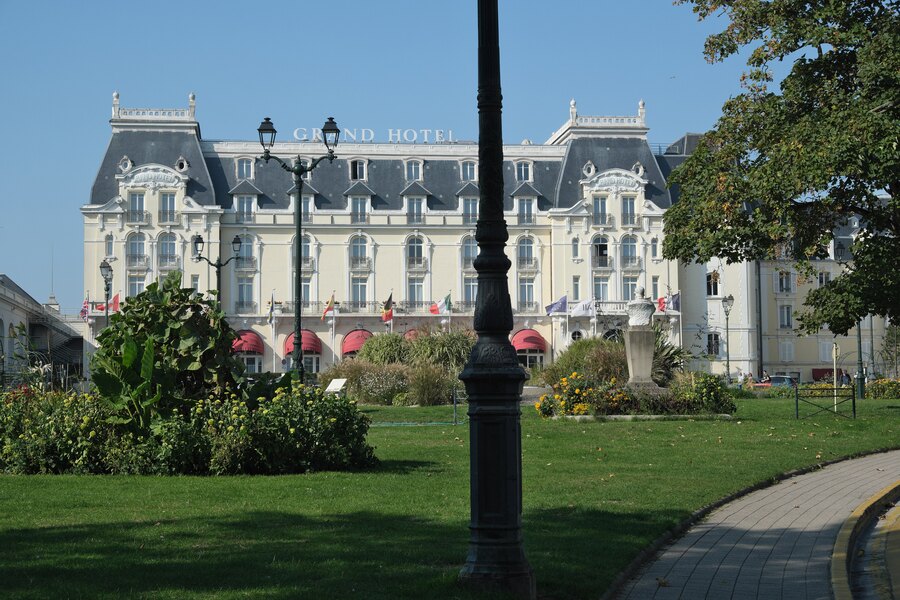
Between the casino and the promenade, a formal French garden whose paths, beds and benches are all aligned on the axis of the town. It is the starting point of every Cabourg walk, and the best place to grasp the fan-shaped plan.
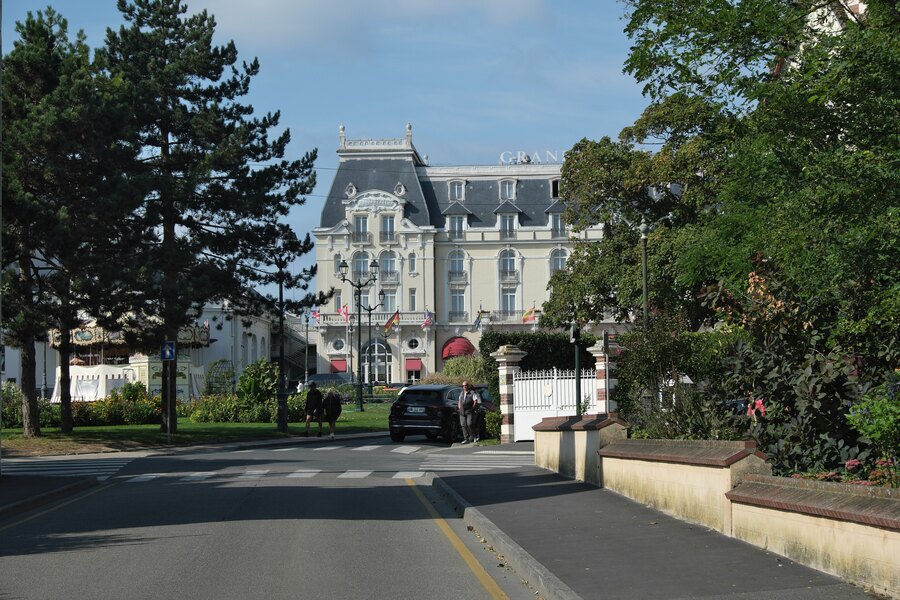
Built at the same time as the Grand Hôtel, it stands at the exact centre of the fan: every avenue converges on it. Under its arcades, terraces and shops keep the day busy; in summer, concerts are given in the open air, facing the sea.
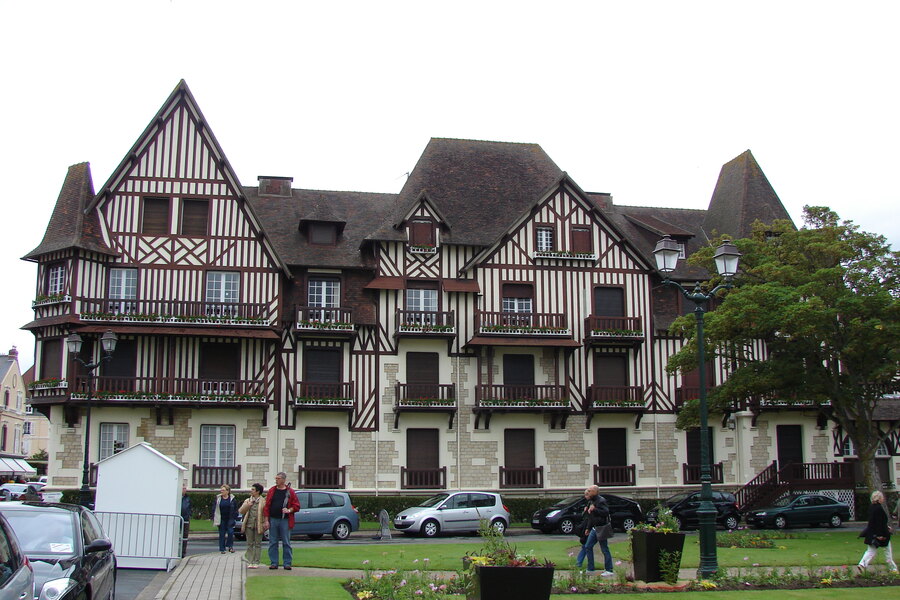
Along the avenues stand two hundred villas built between 1860 and 1930: painted half-timbering, fretted wooden balconies, turrets and verandas. A signposted trail takes you round them on foot in an hour — the finest walk in town after the promenade.
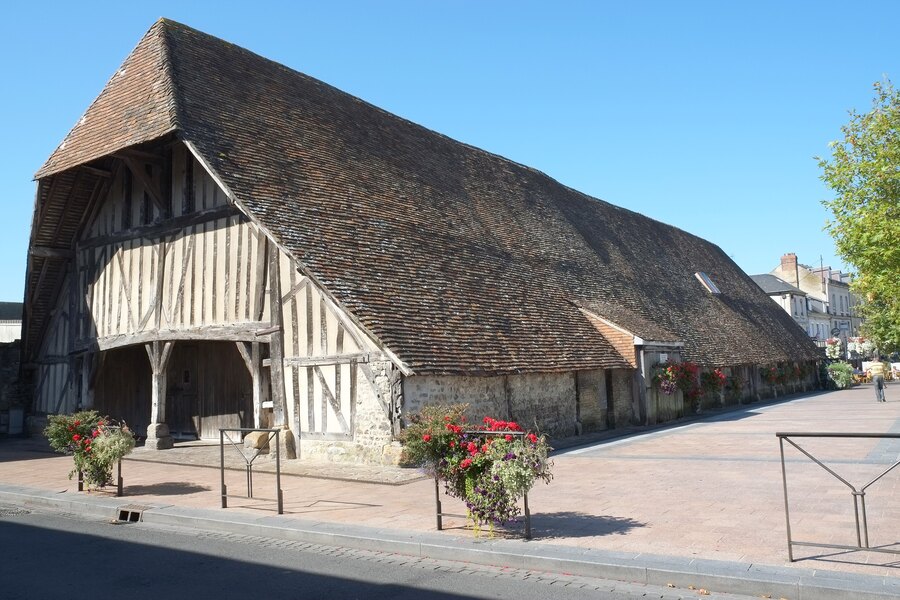
On the other side of the bridge, Dives-sur-Mer has kept its huge 15th-century wooden market hall, where the market is still held. It was from this port that William set sail for England in 1066: the list of his companions is carved in the church.
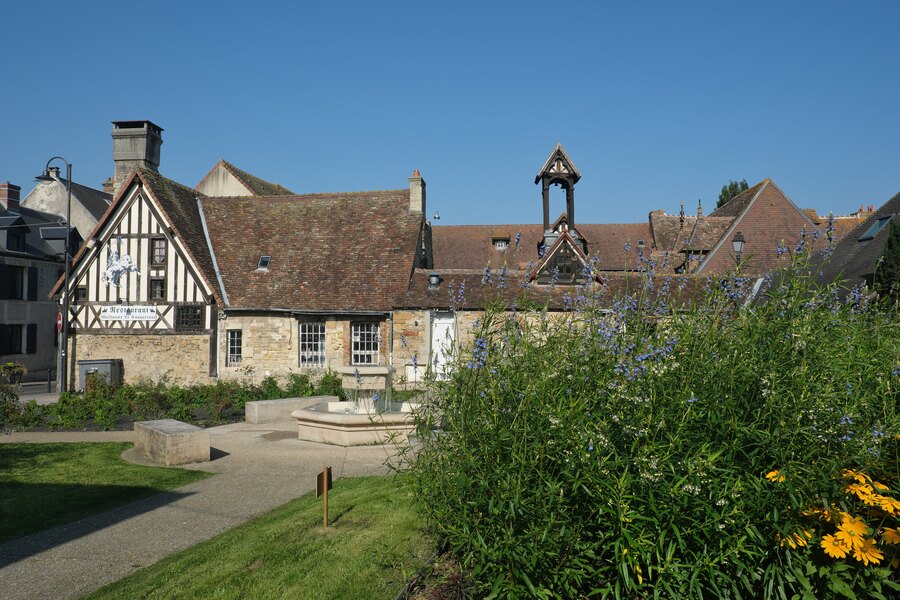
A real Norman town pressed up against the seaside resort: its red brick town hall, its craft village housed in a former coaching inn, its workers' houses. The contrast with Cabourg, five minutes away, is striking.
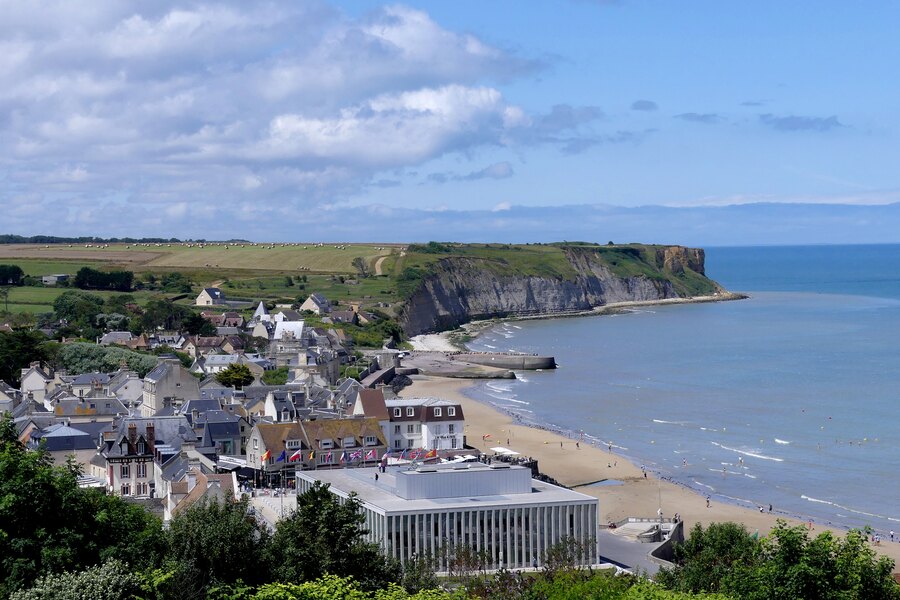
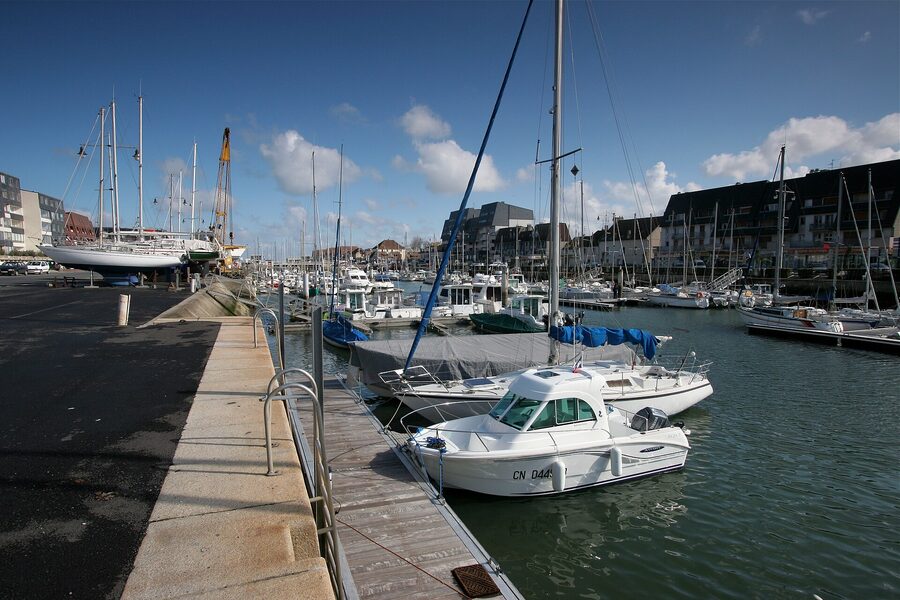
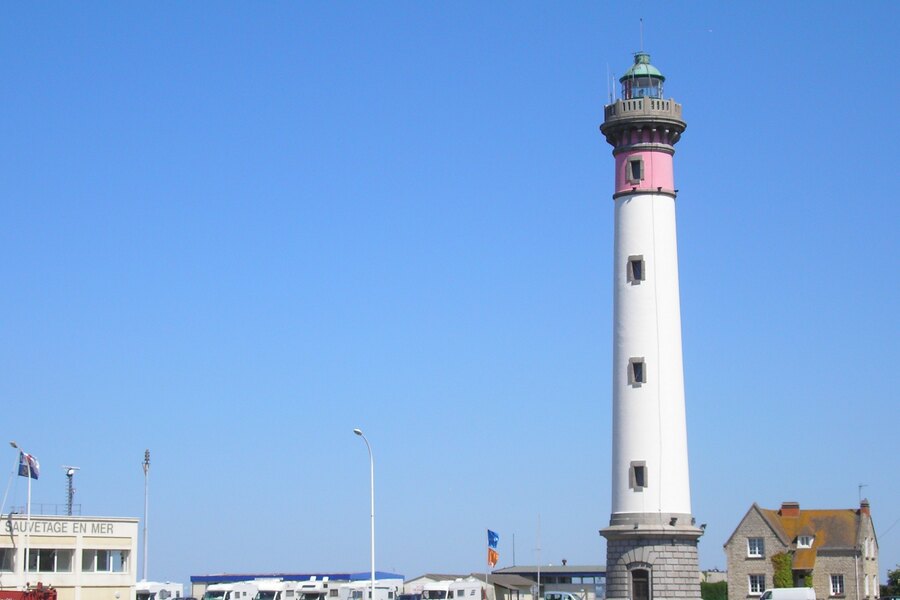
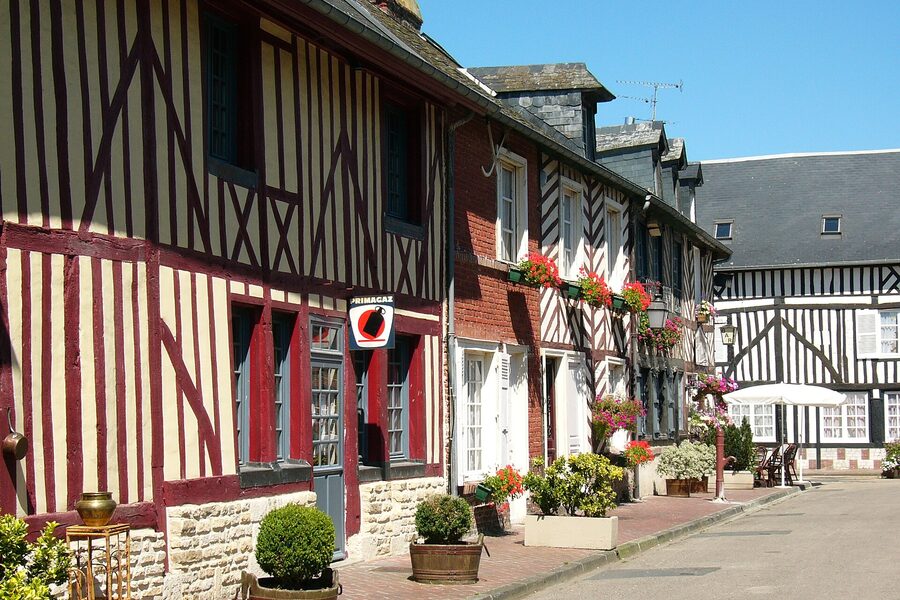
Photo credits: Ibex73, Reinhardhauke, GFreihalter, M. Strīķis, Zairon, René Hourdry — Wikimedia Commons (CC BY-SA / CC0).
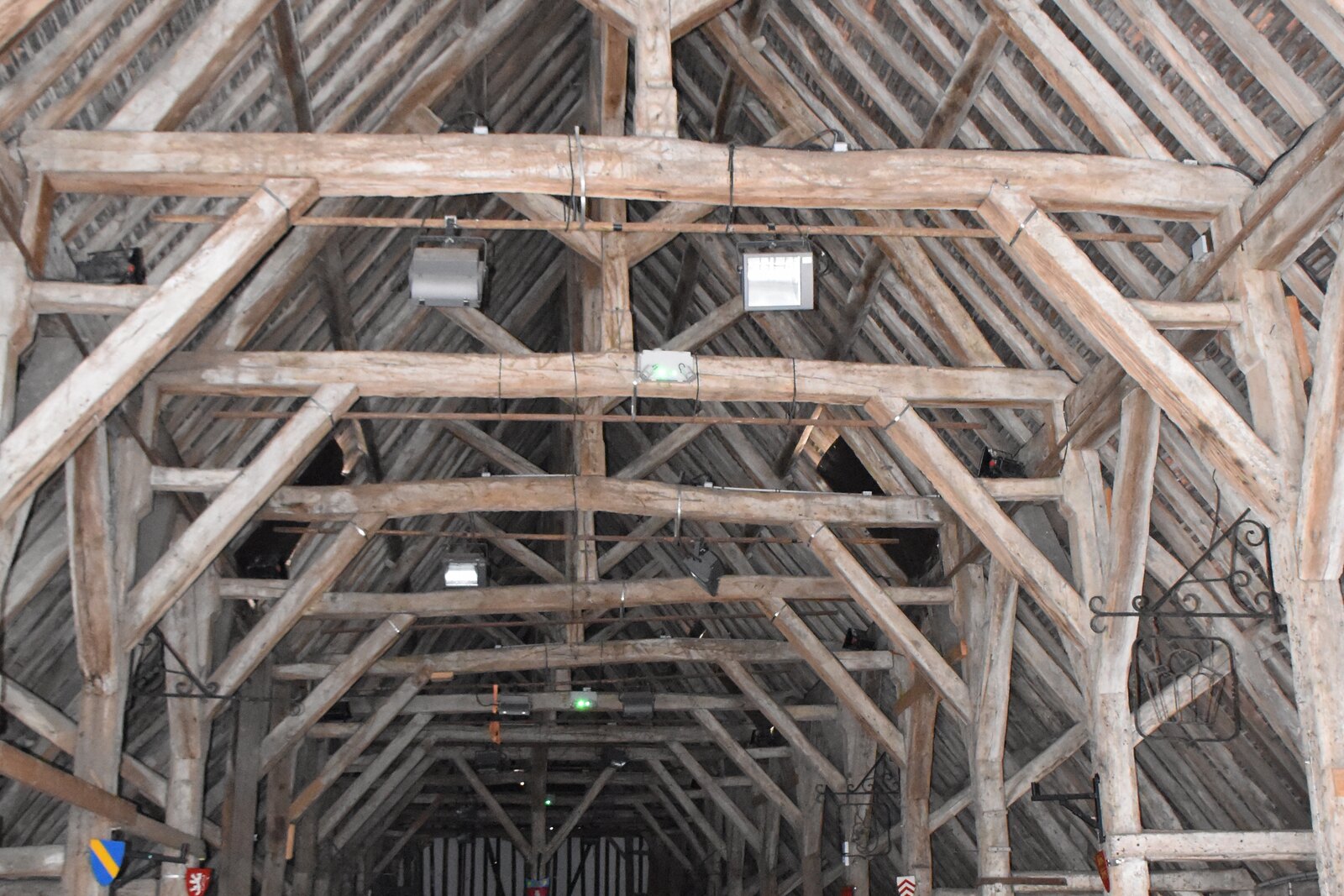 Photo: René Hourdry · CC0
You have to step inside to understand: a forest of oak posts, a frame raised in the 15th century and never taken down since, fifty metres long. The Saturday morning market is still held there, with producers from the Pays d'Auge — cheeses, cider, tripes à la mode de Caen. Ten minutes from Cabourg, and well worth the detour.
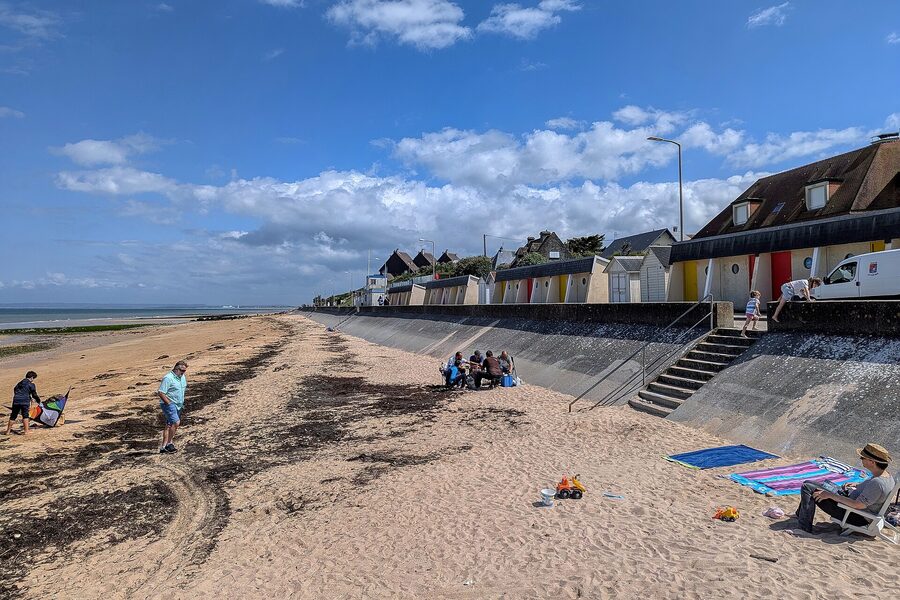
Five-star cottages, a heated water park and the beach fifty metres away, in Luc-sur-Mer.
Check availability