Skip to content
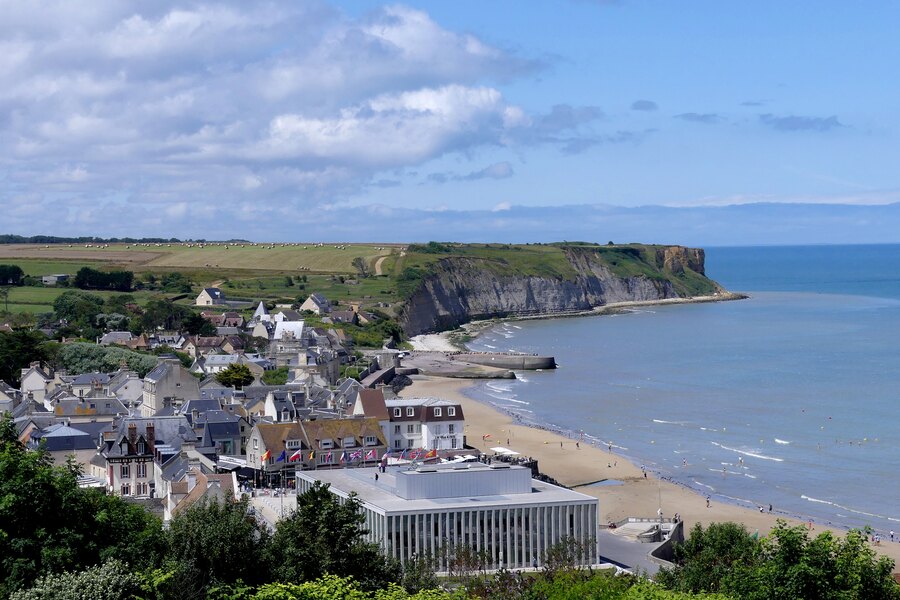
Arromanches-les-Bains and the caissons of the Mulberry harbour seen from the cliff
Côte de Nacre · Calvados

The D-Day beachesSword, Juno, Gold, Omaha and Utah, from the 5-star campsite La Capricieuse

The campsite opens straight onto Sword Beach, at the eastern end of the British sector. From here the five beaches of 6 June 1944 fan out: Juno ten minutes away, Arromanches thirty-five, Omaha and the Pointe du Hoc in under an hour.

Discover

On 6 June 1944, 150,000 men landed along eighty kilometres of Normandy coast, between Ouistreham and the Bay of the Veys. Luc-sur-Mer sits at the heart of that story: the village belongs to the Sword Beach sector, right beside the junction point between the British and Canadian troops. La Capricieuse, a five-star Yelloh Village campsite, makes the ideal base camp for the beaches, the museums and the cemeteries: cottages, a heated water park, a restaurant on site and the sea at the end of the lane.

Good to know

Getting there

From the campsite
  • 50 mto Sword Beach
  • 10 minJuno Beach, at Courseulles
  • 35 minArromanches and Gold Beach

Omaha Beach and the American cemetery at Colleville are fifty minutes away, the Pointe du Hoc an hour: the American sectors call for a full day of their own.

On site

How long to allow
  • 1 hr 30Arromanches museum
  • 2 hrsJuno Beach Centre and its beach
  • 1 hr 30Colleville cemetery

Two days are not too many: one for the British and Canadian sectors, close at hand, one for the American sector west of Bayeux.

Good to know

Planning your visit
  • FreeAmerican cemetery
  • Early morningin July and August
  • 6 Junethe commemorations

Museums should be booked online during the school holidays. Around 6 June the coast roads and car parks are saturated: allow plenty of time, or set off early in the morning.

Along the coast

Six stops on the landing beaches

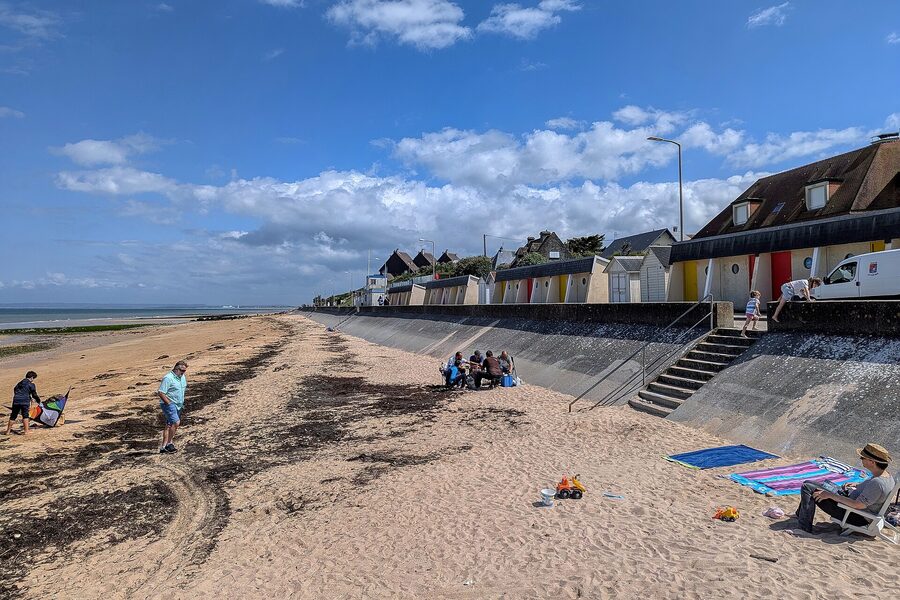
The sandy beach of Sword Beach, at Ouistreham

Sword Beach, in front of the campsite

The beach at the end of the lane is a beach of 6 June 1944: the Sword sector stretched from Lion-sur-Mer to Ouistreham. Captain Kieffer’s French commandos landed here at first light; by that evening the British had joined the paratroopers at Bénouville. People swim here today as they would anywhere else — the history simply lies underfoot.
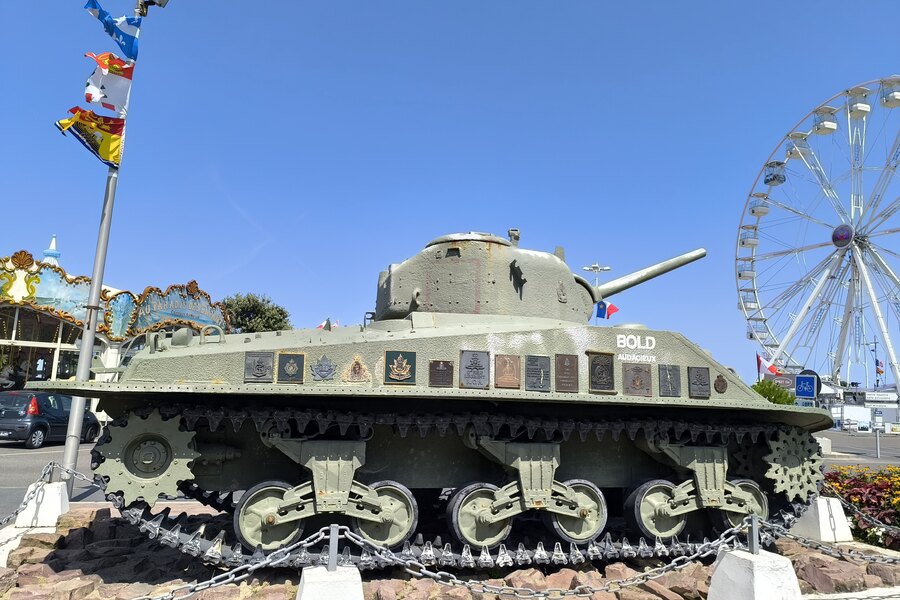
The Bold tank on Juno Beach at Courseulles-sur-Mer

Juno Beach and Courseulles

Ten minutes from the campsite, the beach where fourteen thousand Canadians came ashore. The Juno Beach Centre tells their story, from leaving Halifax to the liberation of the Bessin villages. The visit carries on along the beach, where bunkers and a Cross of Lorraine remain, then into the oyster harbour.

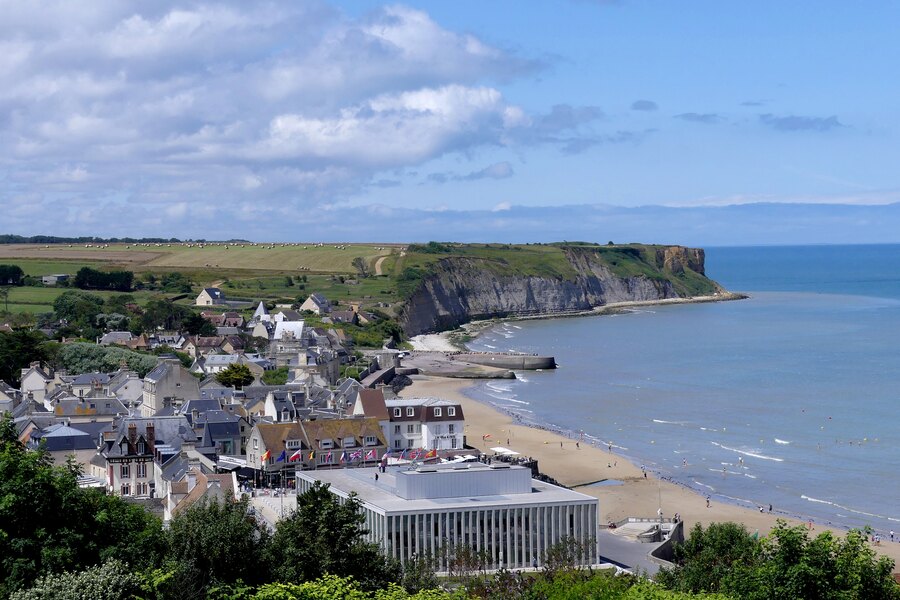
Arromanches-les-Bains, the caissons of the Mulberry harbour and Cape Manvieux

Arromanches and the Mulberry harbour

Thirty-five minutes’ drive to one of the greatest engineering feats of the war: in a matter of days the Allies assembled a harbour the size of Dover’s off this shore. The Phoenix caissons still break the surface of the bay. The finest view is from the cliff east of the town.

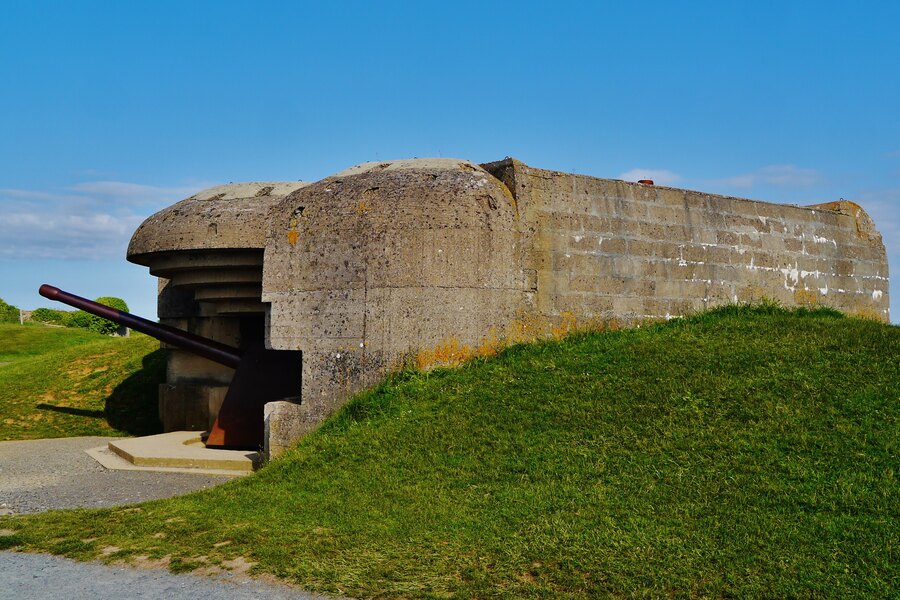
A German gun in its casemate at the Longues-sur-Mer battery

The battery at Longues-sur-Mer

Four casemates set on the cliff between Omaha and Gold — and, above all, the only original guns still in place anywhere along the coast. The site is free to visit, out in the wind with the sea below: more often than not, it is the children’s favourite stop.

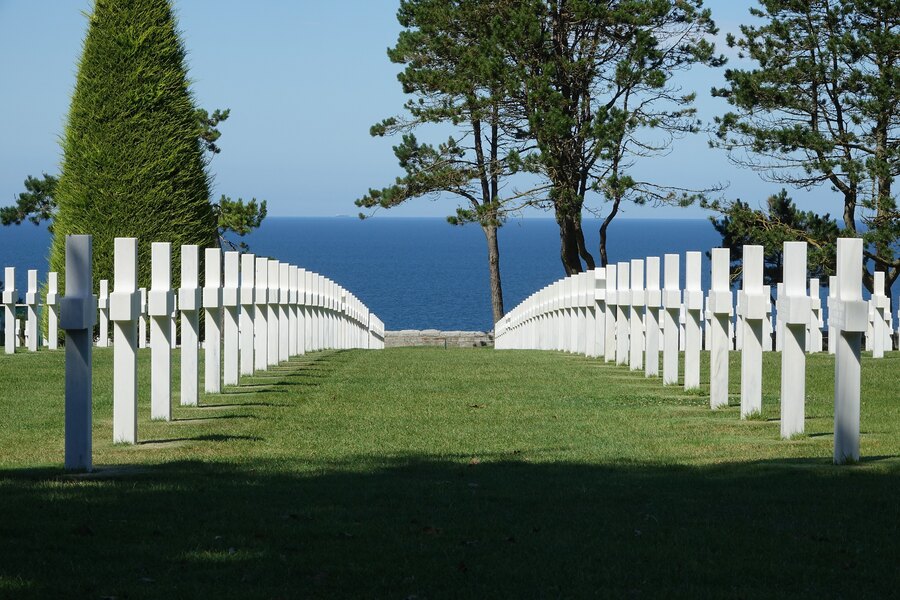
The white crosses of the American cemetery at Colleville-sur-Mer, above Omaha Beach

Omaha Beach and Colleville

Nine thousand three hundred and eighty-seven crosses and Stars of David lined up facing the sea, above the deadliest beach of 6 June. The American cemetery at Colleville-sur-Mer is free to visit; its visitor centre retraces the lives of those who rest there.

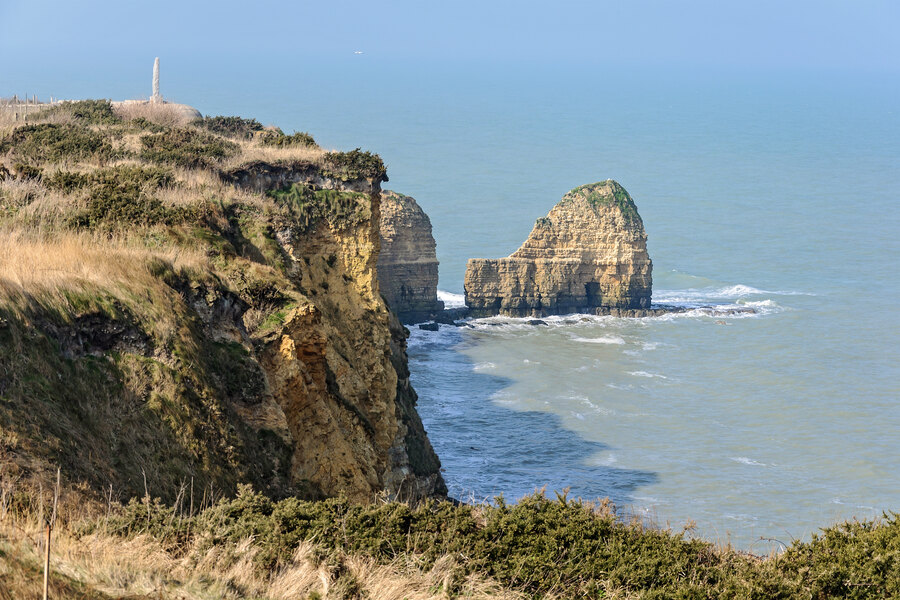
The cliffs and coastline seen from the Pointe du Hoc

The Pointe du Hoc

A thirty-metre cliff scaled with rope ladders by Colonel Rudder’s Rangers on the morning of 6 June. The plateau, pitted with bomb craters and torn-open blockhouses, has been left exactly as it was in 1944. An hour’s drive from the campsite, and a landscape you do not forget.

Photo credits: Myrabella, BienheureuxAnonyme, Dr Wilson, Florian Pépellin, Jebulon, Gzen92, Kev22, Dobroš, Zairon, Dr Bob Hall — Wikimedia Commons (CC BY-SA / CC0).

The detour worth making

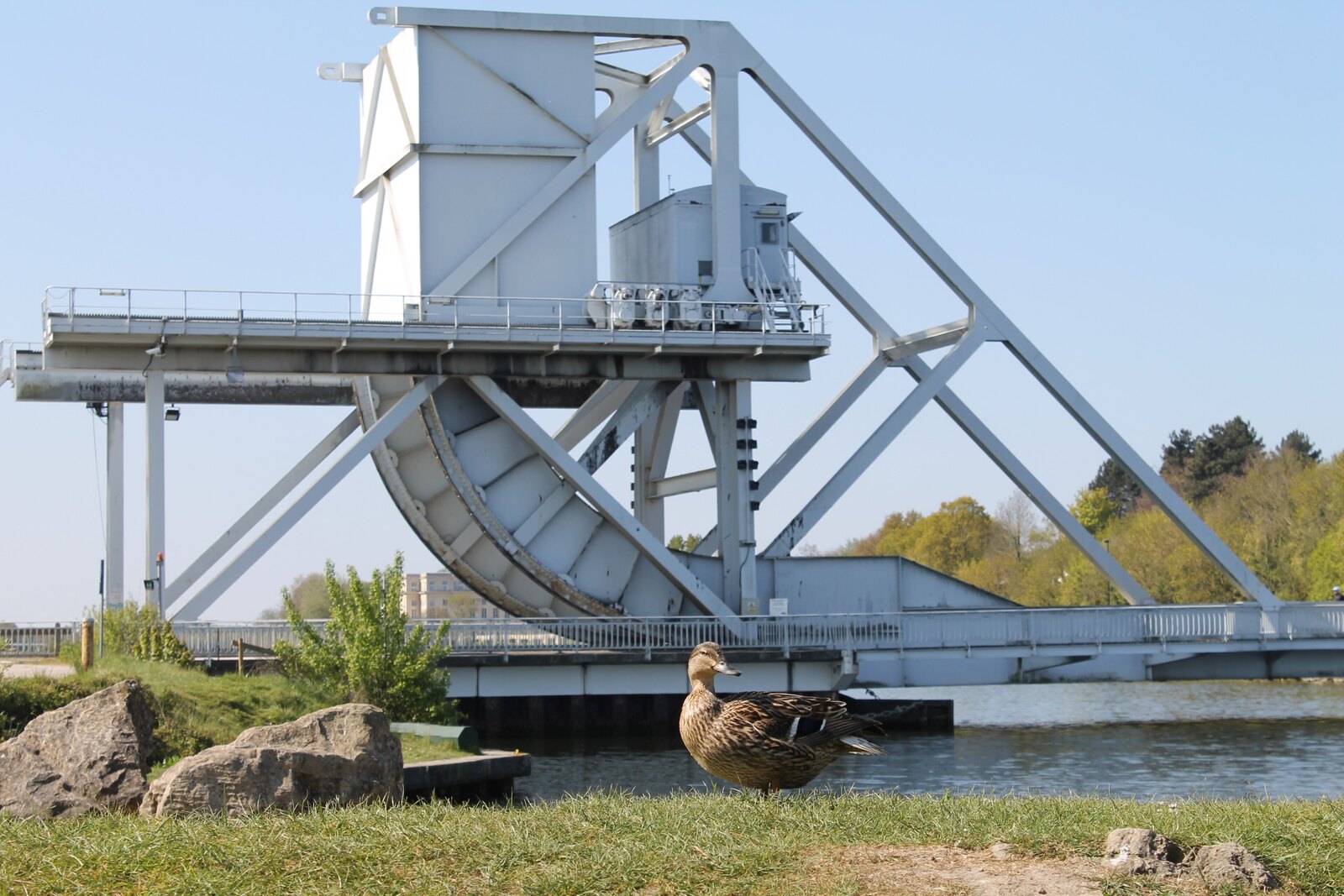
Pegasus Bridge

The original Pegasus Bridge, on display at the Bénouville memorialPhoto: Kev22 · CC BY-SA 4.0
15 minutes from the campsite

The very first objective of the Liberation

During the night of 5 to 6 June, at 00:16, three gliders landed fifty metres from the bridge at Bénouville: the first operation of D-Day began there, before a single ship had arrived. The original bridge is now displayed at the memorial, beside the Café Gondrée, the first house in France to be liberated. A quarter of an hour from the campsite, and perfect at the end of the day.

Frequently asked questions

Frequently asked questions about the D-Day beaches

Which campsite is closest to the D-Day beaches?+
La Capricieuse opens straight onto Sword Beach, fifty metres away: the campsite beach is itself a landing beach. Juno Beach is ten minutes away, Arromanches and Gold Beach thirty-five, Omaha Beach fifty.
How many days do you need to visit the D-Day beaches?+
Two days are not too many: one for the British and Canadian sectors, right beside the campsite, and one for the American sector west of Bayeux, with Omaha Beach, the Colleville cemetery and the Pointe du Hoc.
Which D-Day sites are best with children?+
The Juno Beach Centre at Courseulles, about two hours, with its guided bunker tour led by young Canadians; and the Mulberry harbour at Arromanches, whose caissons can still be seen from the beach.
Can visitors attend the 6 June commemorations?+
Yes, ceremonies are held all along the coast. Roads and car parks are saturated on those days: allow plenty of time, set off early, and book your stay well in advance.

Your base camp in Normandy

Five-star cottages, a heated water park and the beach fifty metres away, in Luc-sur-Mer.

Check availability
Village map — La Capricieuse
Map of La Capricieuse campsite: Omaha, Juno, Sword and Gold districts, water park in the centre and direct access to the D-Day beach
Click the map to zoom in · Esc to close