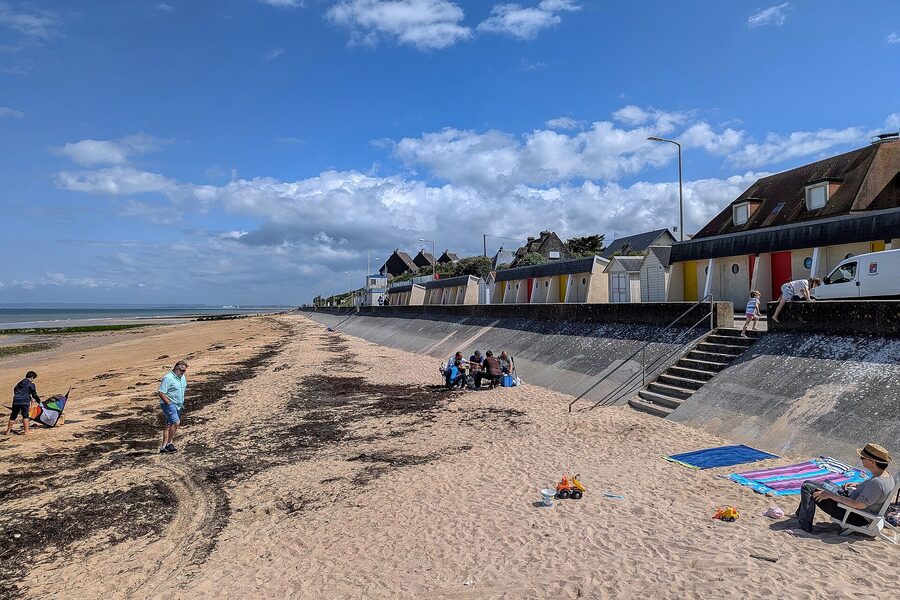
Luc-sur-Mer
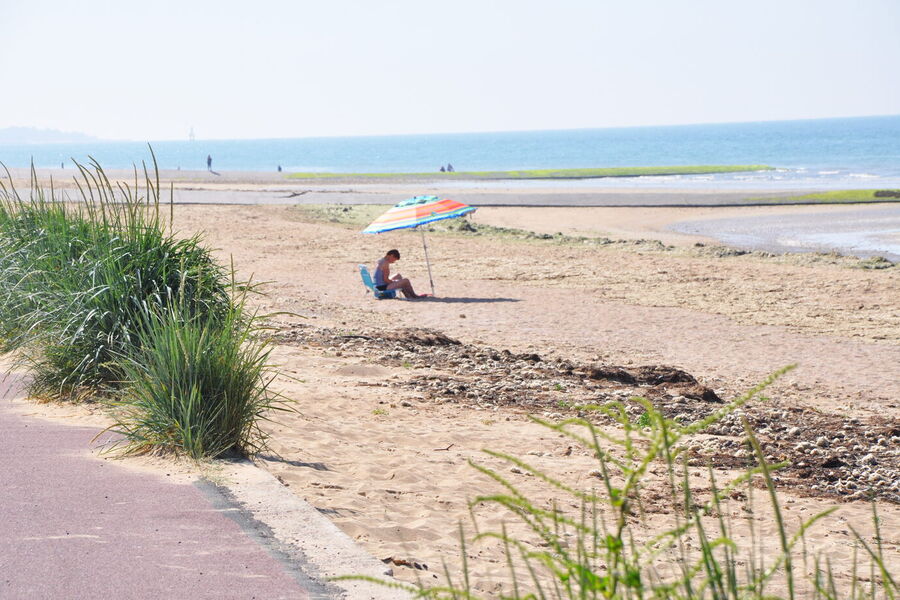
The campsite's own village: two kilometres of sand, a pier, and a park sheltering the skeleton of a whale stranded here in 1885. A bathing resort since the 19th century, it has kept its balconied villas and its air of holidays past.
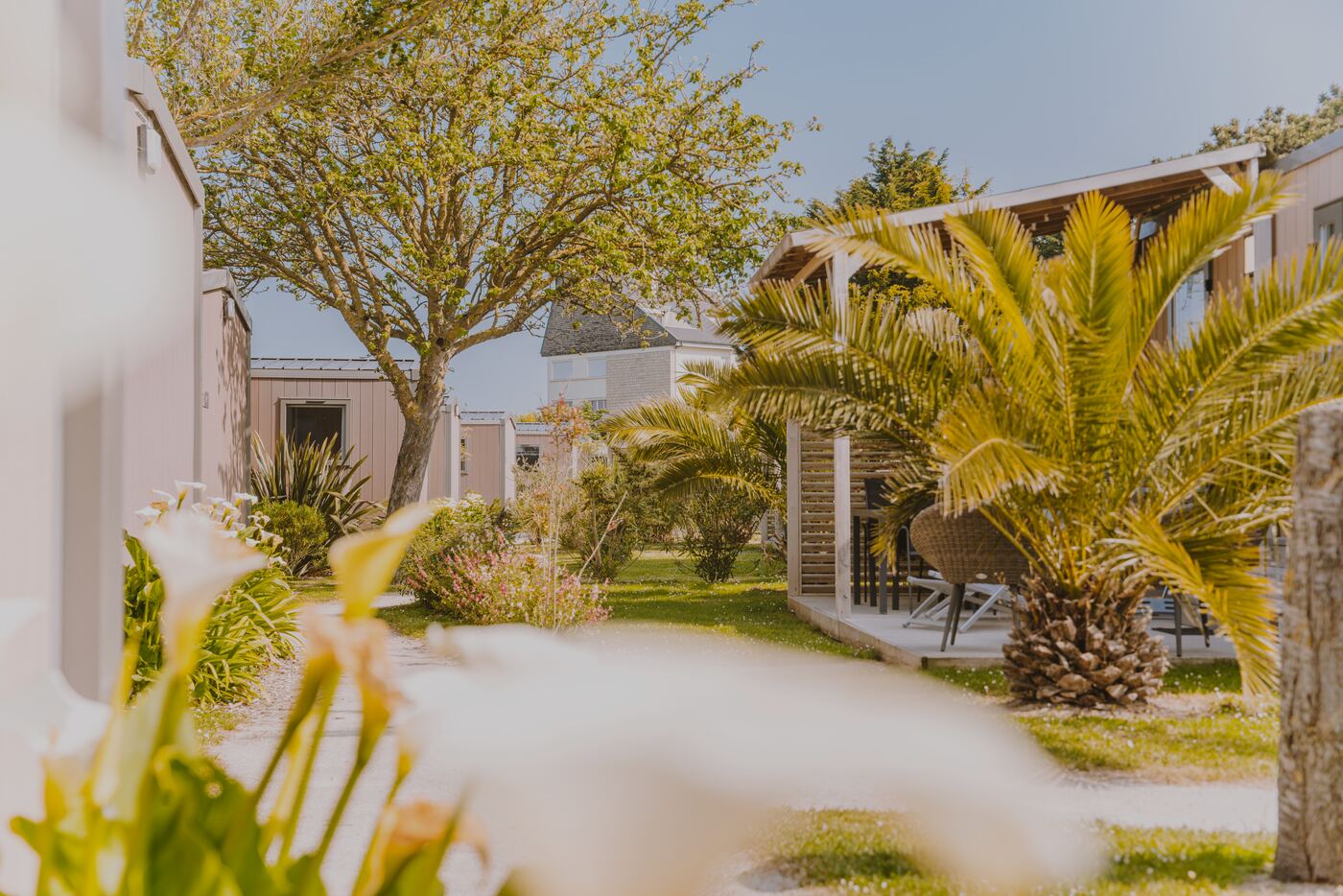
An upmarket campsite: a 1,500 m² covered and heated water park, cottages for 4 to 8 people, an award-winning restaurant open for lunch and dinner. Rated 4.7/5 by more than 1,800 guests on Google.
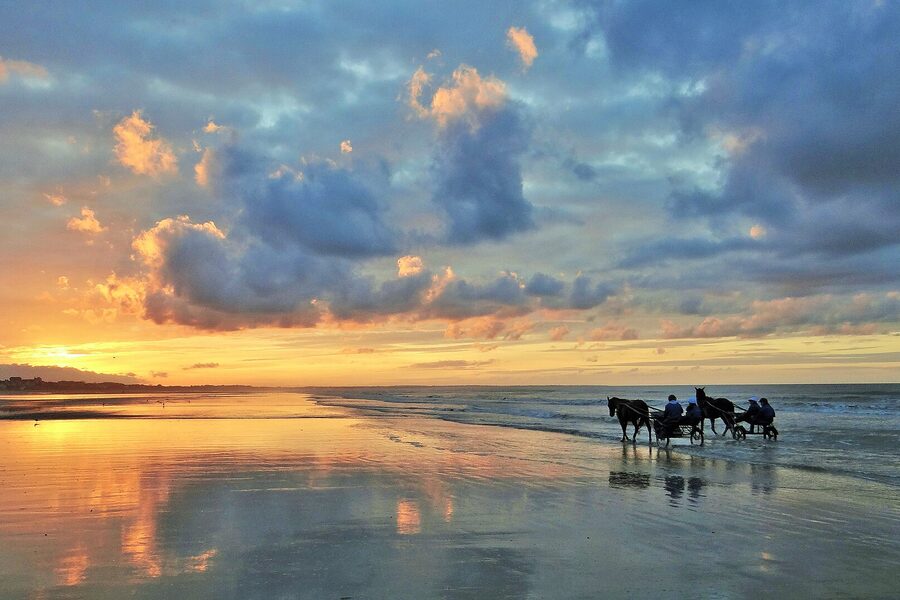
Looking for a campsite on the Côte de Nacre? La Capricieuse is in Luc-sur-Mer, in the middle of the coast, fifty metres from the beach. The promenade starts right there: Langrune is a ten-minute walk, Saint-Aubin-sur-Mer and Lion-sur-Mer are four kilometres away, always above the sand. It is an upmarket campsite: the Premium cottages come with beds made up, a dishwasher and a covered terrace, and the restaurant has won the Yelloh Restaurant Award four years running. On days when the Channel is too cool, the water park takes over, with three covered pools between 30 and 32 °C and an outdoor swimming pool at 29 °C. It is called the Côte de Nacre, the mother-of-pearl coast, for the colour of the wet sand when the sea withdraws, and it withdraws a long way.
Covered fun pool at 30 °C with slide, paddling pool at 32 °C, jacuzzi at 31 °C and a 22-metre outdoor swimming pool at 29 °C. Kids’ club for ages 5 to 12, restaurant and bar open for lunch and dinner.
In recent reviews, our guests mention first the welcome from the team, the cleanliness of the cottages and the kids’ club.
The whole coast can be followed along the coast road, or by bike on the greenway that runs beside the sea from Ouistreham to Courseulles.
The campsite's own village: two kilometres of sand, a pier, and a park sheltering the skeleton of a whale stranded here in 1885. A bathing resort since the 19th century, it has kept its balconied villas and its air of holidays past.

The liveliest of the neighbours, with a promenade lined with terraces and Belle Époque villas. Its rocks, uncovered at low tide, are known for shore fishing; the Canadians landed here on the morning of 6 June.

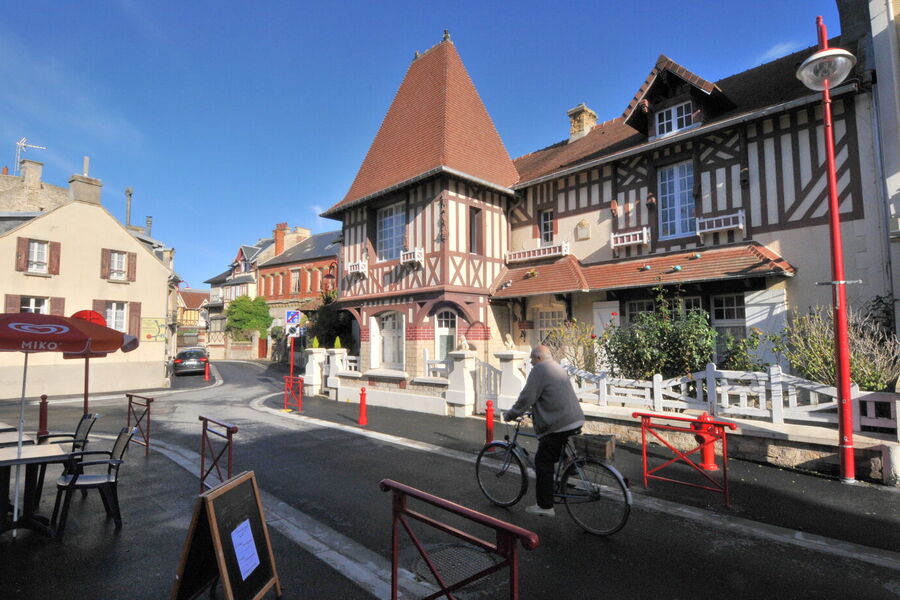
Its half-timbered villa, known as Canada House, is one of the first houses in France to be liberated: the men of the Queen's Own Rifles reached it at 8 a.m. on 6 June 1944. It can still be visited, kept by the same family for generations.

Ten minutes on foot from Luc along the promenade. Its 13th-century church of Saint-Martin carries a Romanesque tower you can pick out from anywhere on the coast. The village has kept its narrow lanes and its Sunday morning market.
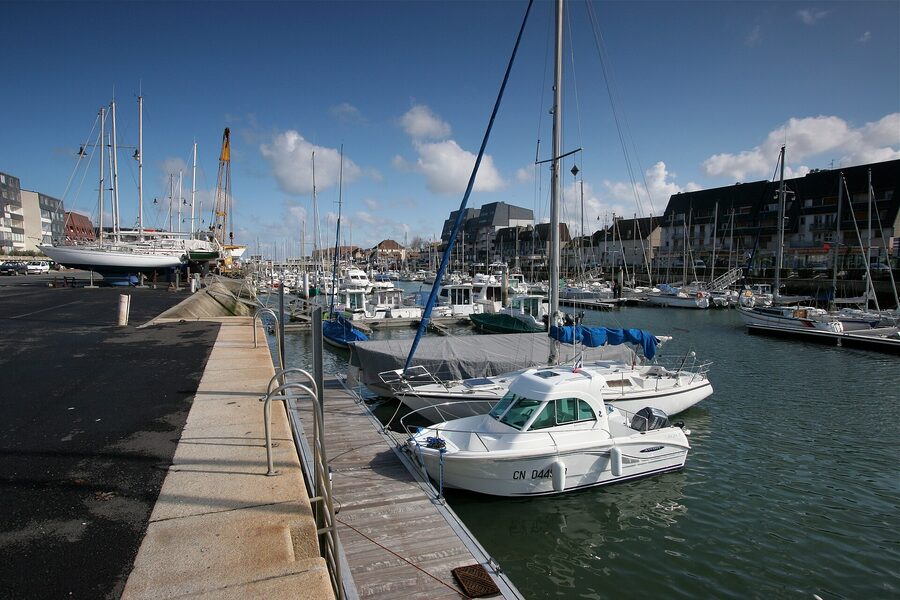
Ten minutes away: the only working harbour on the coast, with its fishing boats, its fish market and its oyster beds. It is also Juno Beach, the Canadian landing beach, with its interpretation centre set on the dunes.

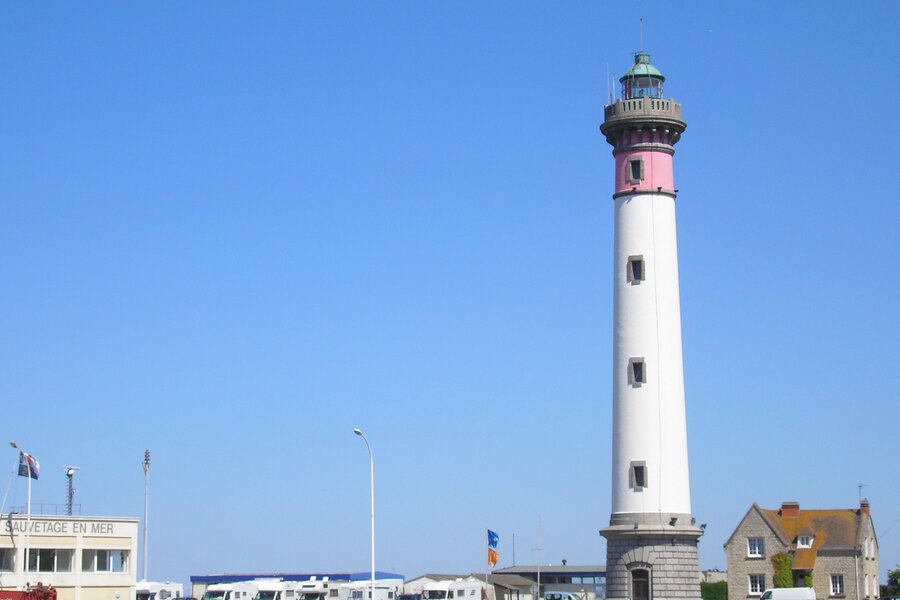
A quarter of an hour to the east: a large ferry port, a lighthouse you can climb, an immense beach — and the Atlantic Wall museum housed in a seventeen-metre bunker. This is where Captain Kieffer's French commandos came ashore.
Photo credits: Pascal Radigue, Luistxo, Dudva, Nitot, Héric Samson, BienheureuxAnonyme, FortReveur, Florian Pépellin — Wikimedia Commons (CC BY-SA / CC0).
 Photo: Florian Pépellin · CC BY-SA 4.0
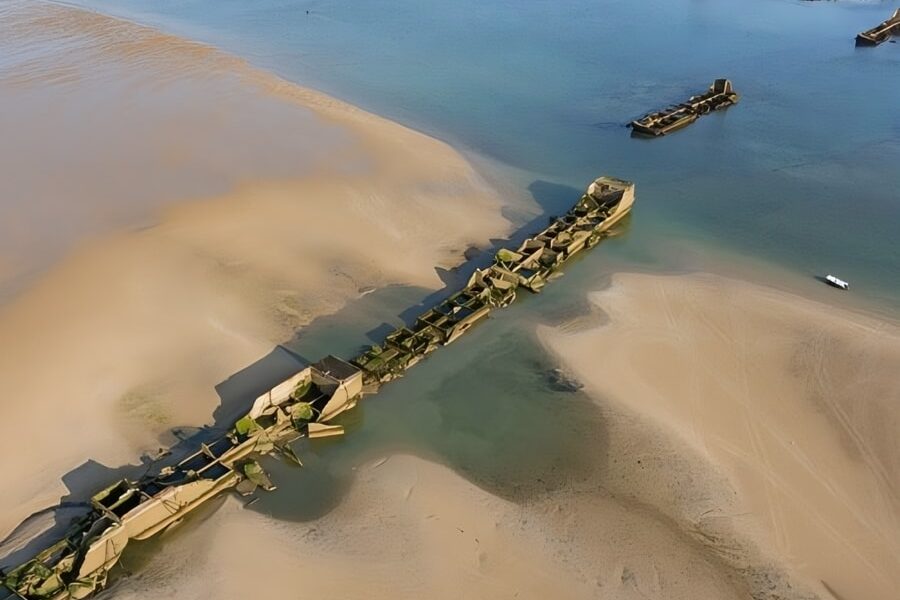
At the western end of the coast, the bay of Arromanches still holds the caissons of the artificial harbour the Allies assembled in a matter of days in June 1944. The newly rebuilt D-Day museum tells the story of that feat; the view from the cliff east of the town is one of the most striking in Normandy. Allow half a day.
Five-star cottages, a heated water park and the beach fifty metres away, in Luc-sur-Mer.
Check availability